

Silverfish
Silverfish will not bite you or spread disease, but you will find them in the pages of your books, the box of old photos, the back of the linen cupboard and the pantry. They feed on paper, starch and natural fibres, and Darwin’s humidity keeps them active all year, not only in the wet. By the time you see one darting across the bathroom floor at night, there are usually plenty more in the cupboards and the roof space. A targeted treatment clears the harbourage they breed in and protects what they are quietly eating.
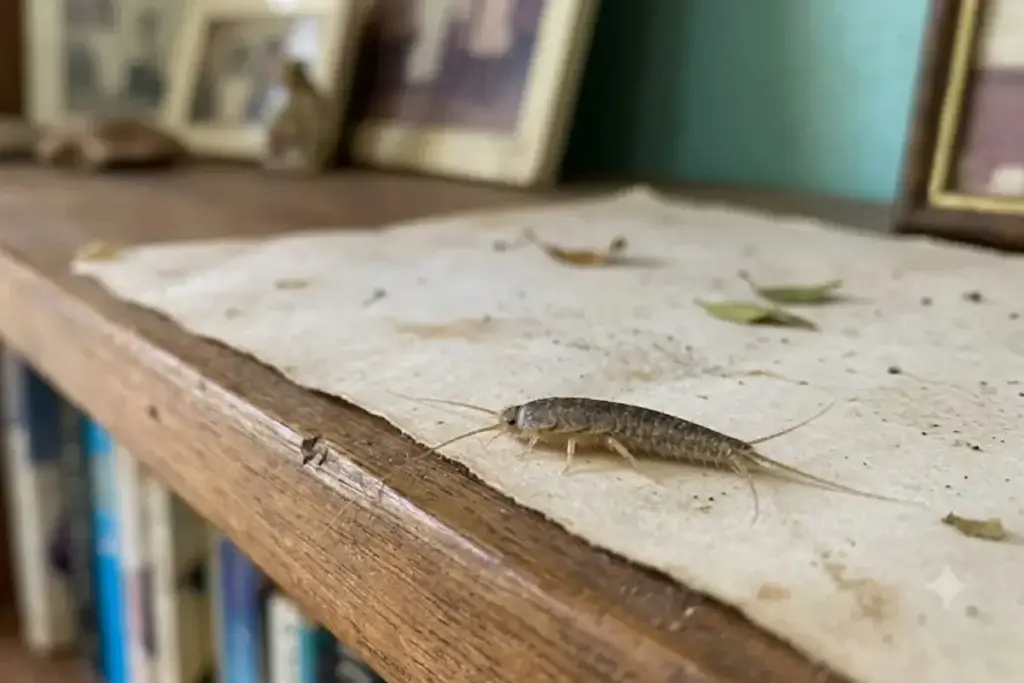
Silverfish Damage
What Silverfish Get Into
Silverfish feed on starch, paper and natural fibres, which means the things they damage are often the things you cannot replace. In a humid Darwin home they work through storage areas, cupboards and roof spaces, grazing surfaces and leaving holes, notches and yellow stains behind them.
Books, paper and documents
They eat paper, cardboard and the glue in book bindings. Stored books, files, certificates and old letters are prime targets.
Photos and keepsakes
Boxed photos, artwork and paper keepsakes get grazed and stained, and once a silverfish has been at them the damage does not come out.
Clothing and linen
They feed on cotton, linen, silk and wool, so stored and out-of-season clothing, and the back of the linen cupboard, are easy pickings.
Wallpaper and plaster
Silverfish graze wallpaper and the paste behind it, and the grey silverfish common here will even damage the surface of plaster.
Pantry and stored food
Flour, cereal, oats, sugar and other dry goods left open in the pantry give them a food source that keeps a population going.
Warning Signs
Signs of Silverfish Activity
Silverfish hide during the day and feed at night, so you usually see the damage before you see the insect. In a Darwin or Palmerston home, these are the signs worth checking for.
Holes, notches and grazed surfaces
Irregular holes and scraped or etched patches on paper, book covers, wallpaper and cardboard boxes.
Yellow stains and scales
Yellowish marks, and a fine dust of silvery scales left in drawers, on shelves and along skirting.
Tiny black droppings
Small pepper-like specks in the places they feed and shelter.
Night-time sightings
A silver, wriggling insect darting for cover when you turn on the bathroom, laundry or kitchen light.
Live insects in stored boxes
Moving stored cartons, books or clothing and finding them underneath. Seeing one usually means there are many more.
Action Plan
What to Do If You Have Silverfish
They will not hurt you, but they will not stop
Silverfish do not bite or spread disease, so there is no danger to the family. Left alone, though, they keep breeding in the humidity and keep grazing your books, clothing and stored food.
Do not rely on retail sprays and a dehumidifier alone
Cutting moisture and decluttering helps, but the grey silverfish common in Darwin copes with normal household humidity, and retail sprays do not reach the cracks and cupboards where silverfish harbour.
Book a treatment
We treat the areas silverfish hide and travel through: wardrobes, drawers, shelving, cupboards, the roof space and subfloor, and the cracks and skirting in between.
Northern Rock Can Help
Every silverfish job is a little different, so we quote it after a look at where they are and how far they have spread. Request a free quote to get started.
Free Quote
Questions
Common questions about silverfish in Darwin and the Top End.
Are silverfish dangerous, and do they bite?
What damage do silverfish cause in the home?
Why do I have silverfish in my Darwin home?
How do I get rid of silverfish for good?
How much does silverfish treatment cost in Darwin?
Do silverfish come back after treatment?
Silverfish in the books and cupboards?
Silverfish work quietly, and the damage to books, documents and clothing is usually done before people realise they have a problem. A treatment clears the harbourage they breed in and protects what they are eating. The sooner it is dealt with, the less they get through.